Your Body Makes Prostaglandin on Purpose
The chain connecting magnesium, calcium, and menstrual cramping — and why the goal isn't to eliminate prostaglandin.
Read PostSymptoms aren't random. They are the body communicating — and when you understand the system behind the signal, herbs make sense in a way they never did before.
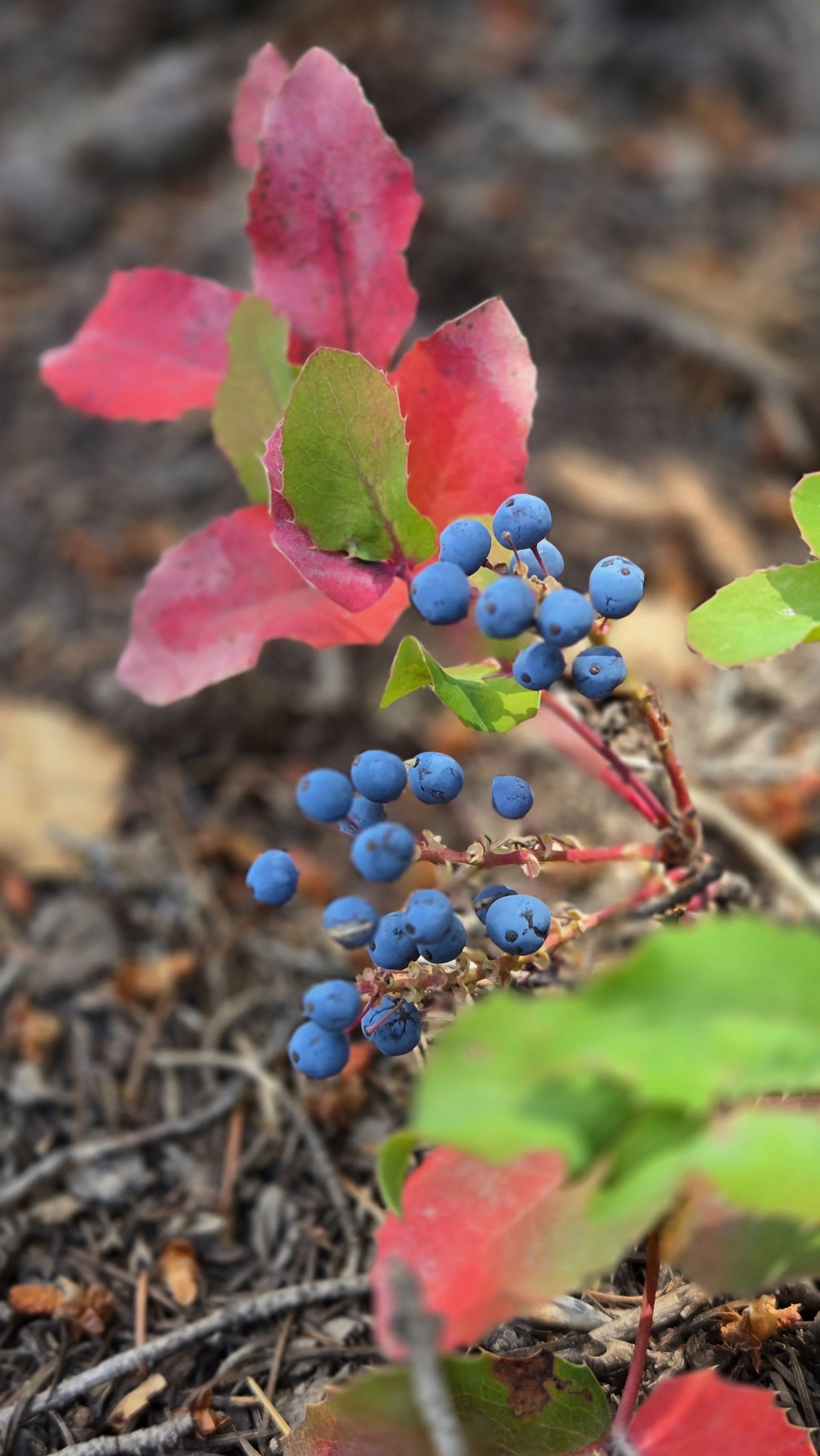

Your body has two completely separate one-cell thick barriers: one lining your digestive tract, one forming your capillary walls. They're made of different cells with different structures. Yet they break down in exactly the same way - and when one fails, it makes the other fail too.
Here's what happens: A leaky intestinal barrier lets bacterial toxins (LPS) into your bloodstream. Your immune system detects this and releases TNF-α and IL-6 (these are inflammatory responses) to fight back. But here's the catch - these same cytokines that protect you from infection also damage the barriers holding your capillaries together. Suddenly you're swollen, your tissues are flooded with fluid, and your lymphatic system is drowning in what it can't drain.
The solution isn't treating the swelling. It's understanding that your gut and your cappilaries are connected - and fixing one barrier without addressing the other keeps the cycle going.
This is the kind of mechnism-based thinking Body & Root is built on.
Body & Root starts with the body.
In 17 years of studying herbalism, I never found a resource that brought all of it together. The physiology, the mechanisms, the phytochemistry, the body systems — in one place, connected the way they actually connect inside the body.
 "
"
So I built it. Body & Root is a living reference library — and it grows every time I sit down to research. Not a course, not a program. A resource that goes as deep as the subject demands.

I came to herbalism at 16 through a digestive illness that conventional medicine wanted to treat surgically. A single herb — and an understanding of the tissue involved — changed the outcome. That experience shaped everything I've built since.
Body-Based Herbalism is built on one idea: symptoms are signals from body systems that need support. I teach people to understand what their bodies are doing first, then use herbs in a way that fits that picture — not a generic protocol, but a response to what's happening in their specific body.
The chain connecting magnesium, calcium, and menstrual cramping — and why the goal isn't to eliminate prostaglandin.
Read Post
Herbs work differently than medications. Understanding the mechanism changes everything about how you use them.
Read Post
The HPA axis, cortisol, and the downstream hormonal effects most people never connect to their menstrual symptoms.
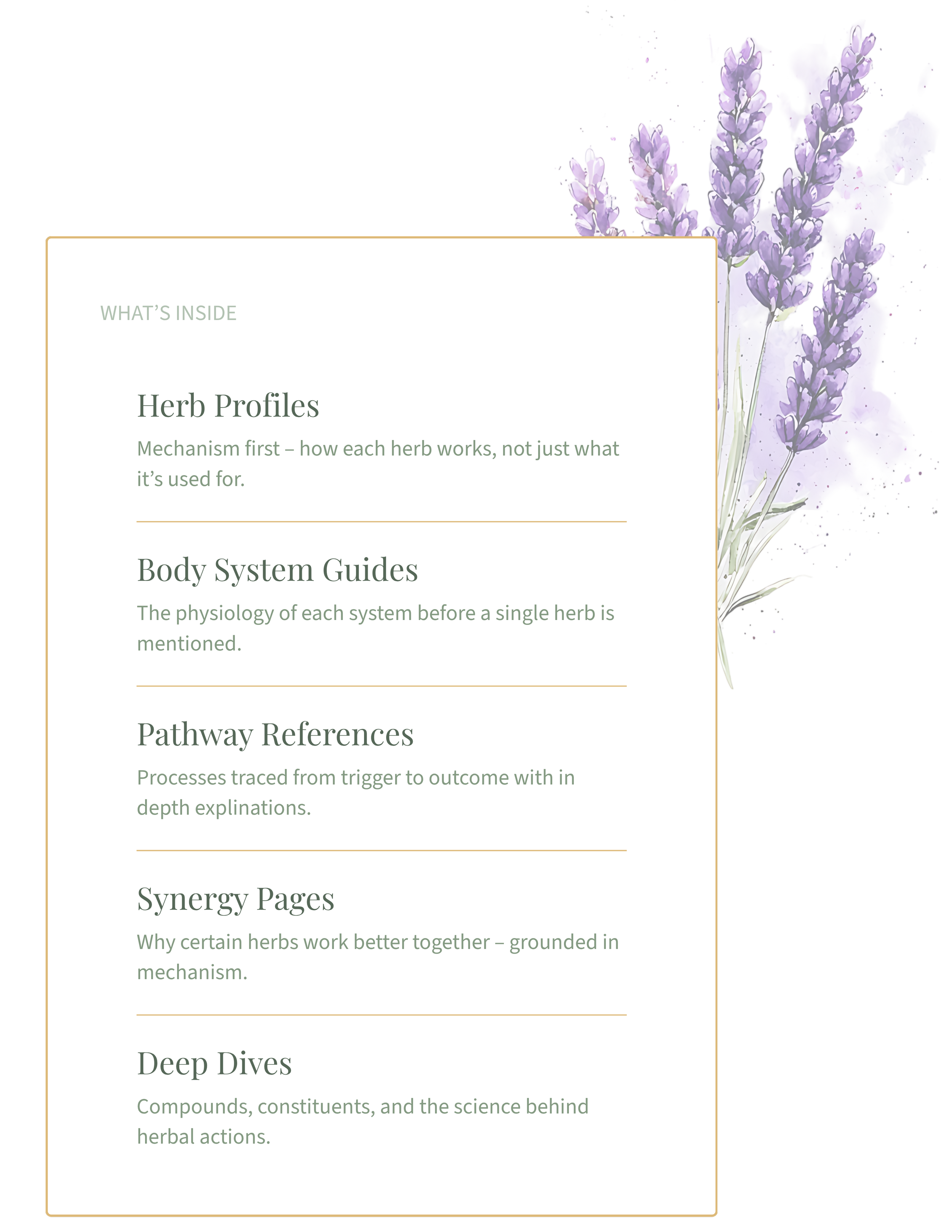
Read PostMost herbal resources start with the herb and work backward. Body-Based Herbalism starts with the body — because when you understand what a system is doing and what it needs, herbs stop being guesswork and start making sense.
Every symptom has a purpose. Before reaching for an herb, understand the system that's creating it — and what it's trying to communicate.
Healthy vs. imbalanced — what shifts when a system is under stress, and what it's signaling when it does. The answer changes which herbs make sense.
Herbs chosen because of what's happening in the body — not a generic protocol, but a response that fits the actual picture.
The body has always been the map. The herbs have always been available.
This is where they come together.